MENU
white-privilege-billboard

Whitewashed: White Americans Discuss Their White Privilege

“…To be white in this culture means to deny the reality of racism; it means to deny the privilege that we have as whites. Most people, who are Whites, don’t want to accept that they are privileged, because they are.”

People don’t want to talk about being White because they know that at a deep level, even though some of them may not have talked about it with anybody or every expressed it, they do know that they get a benefit from being White.”

“… To me, it’s about privilege. A lot of people get to walk around thinking that we live in a meritocracy, and thinking that their own hard work is the only thing that’s responsible for their achievements. I think that it shapes everything.”

“I was taught that you respected Black folk, but not really as human beings, but more like cats, and dogs, and cows; you wouldn’t mistreat a cat or a dog in my family, and you wouldn’t mistreat a black person. I don’t have any trouble admitting that I’m a racist; I think it’s absurd to try to fight with that. I grew up in this society I was conditioned by, I think internally in my psyche I have grounded and rooted those attitudes and I see it in me all the time… I mean, I’m always dealing with it. I don’t think that make me a bad person … I just think it means I’ve been well indoctrinated.”

“… Like Malcolm X said: ‘Racism is like a Cadillac; there’s a new model every year’. Racism is a dynamic social construction, so it’s always changing and it’s always mutating. So people that say, ‘well there’s no racism anymore’, they’re referring to racism as it existed in 1950 or 1920 or 1910.”

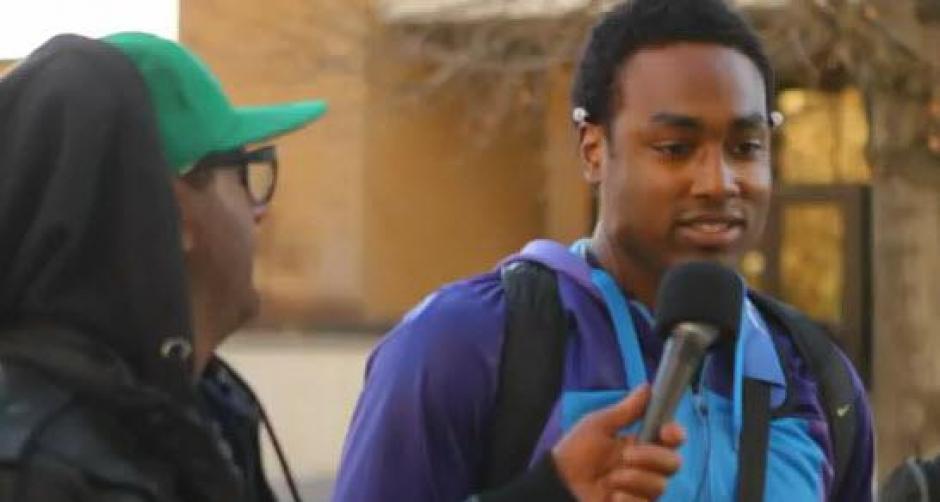
Above,  is a collection of quotes from Whitewashed: Unmasking the World of Whites, a 2013 documentary-short by Mark Patrick George. Clocking in at just under 35 minutes, this interesting featurette examines White privilege and racism via footage—(collected over the course of several years)—of several White Americans offering insight on what ‘whiteness‘ means to them and the situations that have prompted them to realize how institutional racism works to marginalize  ‘others‘ and work in their favor. According to the official website, Whitewashed is “intended to educate and spark dialogue both within and across racial groups.”

Many of the confessions in this documentary are stark and revelatory. Very often during discussions about race between people of color and White people, things will disintegrate and melt into a sticky puddle of defensive excuses (via ‘I’m not like them‘ disclaimers that decontextualize the conversation), dismissive hand waving and demands that we ‘get over’it’ (although some long for its return), thinking discussions about race is reserved for people of color, silencing, and tone policing; which is why many people of color shut down and refuse to engage any further, because we feel as if our voices are being stifled, we aren’t truly being heard, the White person (or people) we’re conversing with isn’t really ready to deconstruct the topic of race as much as s/he just wants to prove how ‘anti-racist’ s/he is, and we feel as if our lived experiences navigating microaggressions are viewed as being trivial… note the many antagonistic blackface costumes that abounded this Halloween despite pre-Halloween pleas that White people have their costume fun sans anti-Black minstrelsy, and the collective annoyance at Black people’s disappointment and righteous indignation.

The quote that stood out to me the most was from the subject who admitted to being racist, and who likened the respect he offered to Black people as being akin to not mistreating an animal, as opposed to the deference he’d extend to another human being. That was the most evocative statement, because it was the most honest. To be frank, more often than not, many White people don’t see the humanity of people of color despite protestations to the contrary, and this is what makes it easy for them to ignore oppression, to disregard intersectionality within various social justice and present-day civil rights movements, to deny that racism still exists, to ignore the violence (mentally, emotionally, and physically) wrought by institutional racism, and to peddle post-racial propaganda.

The discomfiting feeling race discussions generally incite, comes from hearing things that are difficult to process and  many times, when uncensored, they come from folks who benefit from White privilege, when they’re allowed the space and time to talk freely. I believe those perspectives are equally as important, because White people can’t begin to try to help deconstruct racism and work towards resolving tensions and present themselves as genuine allies (a word I’m beginning to loathe) like many claim to want to do, until they unpack their privilege and say the words they loathe hearing out loud and identify the elephant in the room for what it is. When you call it out… White privilege… Racism… you can begin the work to dismantle it.

See Whitewashed in full, below.


Comments

comments

Written by:

Published on: November 3, 2013

Filled Under: Culture, Education, Media, Race, Video

Views: 601

, , , , ,

  • Secretsquid

    You need to rest, get more sleep and try some Prozac. It’ll.get better , Snookums.

    • http://brothawolf.wordpress.com Brotha Wolf

      At the risk of getting banned from this blog, let me tell you what you’ve probably been told a hundred times during your lifetime.

      Go to hell.

      • Secretsquid

        Thank you! I’m surprised I hit a nerve. Hope you don’t get banned though. Worst thing I’ve heard is “We have to let you go.”

    • http://rippdemup.com/ RiPPa

      Did you watch the documentary above? I’m really curious to hear your thoughts pn the commentary of the white folks interviewed. Please let me know what you think, will you?

      • http://www.coffeerhetoric.com/ TiffJ

        Something tells me, he didn’t. He’s too busy trying to play the contrairian. If he actually does watch it, I’d be interested in hearing some thoughts, of value, too.

        • Secretsquid

          I cleared an acre of woods with a chainsaw and a shovel, then built a cabin my self I did the framing, siding, insulation,electrical, paneling and appliance installation. We lived in it for a year.

          • Secretsquid

            Pretty ugly, but livable.

      • Secretsquid

        Well I wrote a long response while the movie was loading. Then the Kindle reset and I lost everything. There are all types of “white folks” just like “black folks” we all don.t think alike either. Still trying to load. Here is my homestead I built with my 2 hands and ” white privilege”

        • Secretsquid

          I don’t have the time to write racist screeds in academia.

    • http://www.coffeerhetoric.com/ TiffJ

      I *do* operate on little sleep; but my insomnia still isn’t as dire as your white sociopathy and lack of reading comprehension appear to be. :-) #ByeFelicia

      • Secretsquid

        Try reading some of the stuff I read! Technical Manuals for the Data General MV 2000 minicomputer or the manual for a Sclumberger 635 Automatic con tester or Max Planck.s essay on Determinism, or War and Peace by Dosdeovesky.

        • http://www.coffeerhetoric.com/ TiffJ

          Actually, ‘War and Peace’ was written by Leo Tolstoy. *Dostoyevsky (you spelled it wrong) wrote ‘Crime and Punishment’, but anyway…

          • Secretsquid

            I read Crime and Punishment also.I got them switched. Difficult reading, written in 19th century and interpreted by British translators. I made the mistake of taking English literature in college instead of America lit. I’m basically a techy. I love all things mechanical and electronic. What do you do?

  • http://rippdemup.com/ RiPPa

    This documentary totally blew my mind! This is a must see for White folks!!! #race #privilege

    • http://www.coffeerhetoric.com/ TiffJ

      It really is something. I sort of wish it were feature-length, or maybe fifteen minutes longer. These are White people, saying the things many of us have *been* saying and that many of them rarely ever admit to. Give folks a safe space and the time to speak freely, and, as startling as it can be, you finally get the *truth*. Can’t dismantle White Supremacy and privilege or call yourself an anti-racist ‘ally’ unless folks are living in their truth and saying uncomfortable words out loud.

  • Secretsquid

    I tried the movie several times. All I get is spinning circle. May be my Kindle or inadequate band width.

  • Secretsquid

    A neighbor in the ‘hood posted this. Mrs Velasquez(wife) made him take it down. He was a gunnery sergeant in the Marines.

  • Bryan Ortez

    This is a pretty good documentary, thank you for sharing. Also, great reflections and insights on privilege and race, I really appreciate them.

    • http://www.coffeerhetoric.com/ TiffJ

      @bryanortez:disqus, Thanks for reading. The documentary is– although not all that surprising– pretty revelatory coming from the horses’ mouths (so to speak). I wish it were a bit longer.

      • Bryan Ortez

        A lot of the people on the street talked about some pretty basic stuff. Admitting that they don’t think about what it means to be white or how their being white might impact their opportunities or the ways in which people interact with them.

        I wonder if the person doing the interviews encountered any hostility in talking about whiteness as you would typically encounter online.

        • http://www.coffeerhetoric.com/ TiffJ

          “I wonder if the person doing the interviews encountered any hostility in talking about whiteness as you would typically encounter online.”

          –That’s an excellent point. I wonder too. I think this is why I found the doc so intriguing; the fact that the people were so forthcoming and frank about how they benefit from white privilege. Whenever discussions about white privilege are broached, white people tend to react with hostility or deny that such a thing exists, so I was, and still am, surprised folks were willing to be so forthcoming on camera, especially the man who admitted that he was a racist and that he didn’t really recognize the humanity of black people.

          • Bryan Ortez

            I think a lot of the people they interviewed indoors were probably professors. I just assume based on the small rooms they were in and the walls being covered in books and notes and other things.

            The man who admitted he was racist, yes that is a very difficult thing to admit to. Yes, I have been racist. I also wonder in what ways I still may wind up doing something racist, such as coming to a blog about issues that effect a majority of black people and expecting the writers and others to engage in dialogue with me and help educate me about anti-racism dialogue ;)

            I try to express my support in small ways at least and continue seeking to learn from the experiences of others and propel their narrative forward.

            Thanks for the feedback, TiffJ :)

  • Katherine McChesney

    White privilege.

    Whites paying for welfare, section 8 and foodstamps for blacks.